
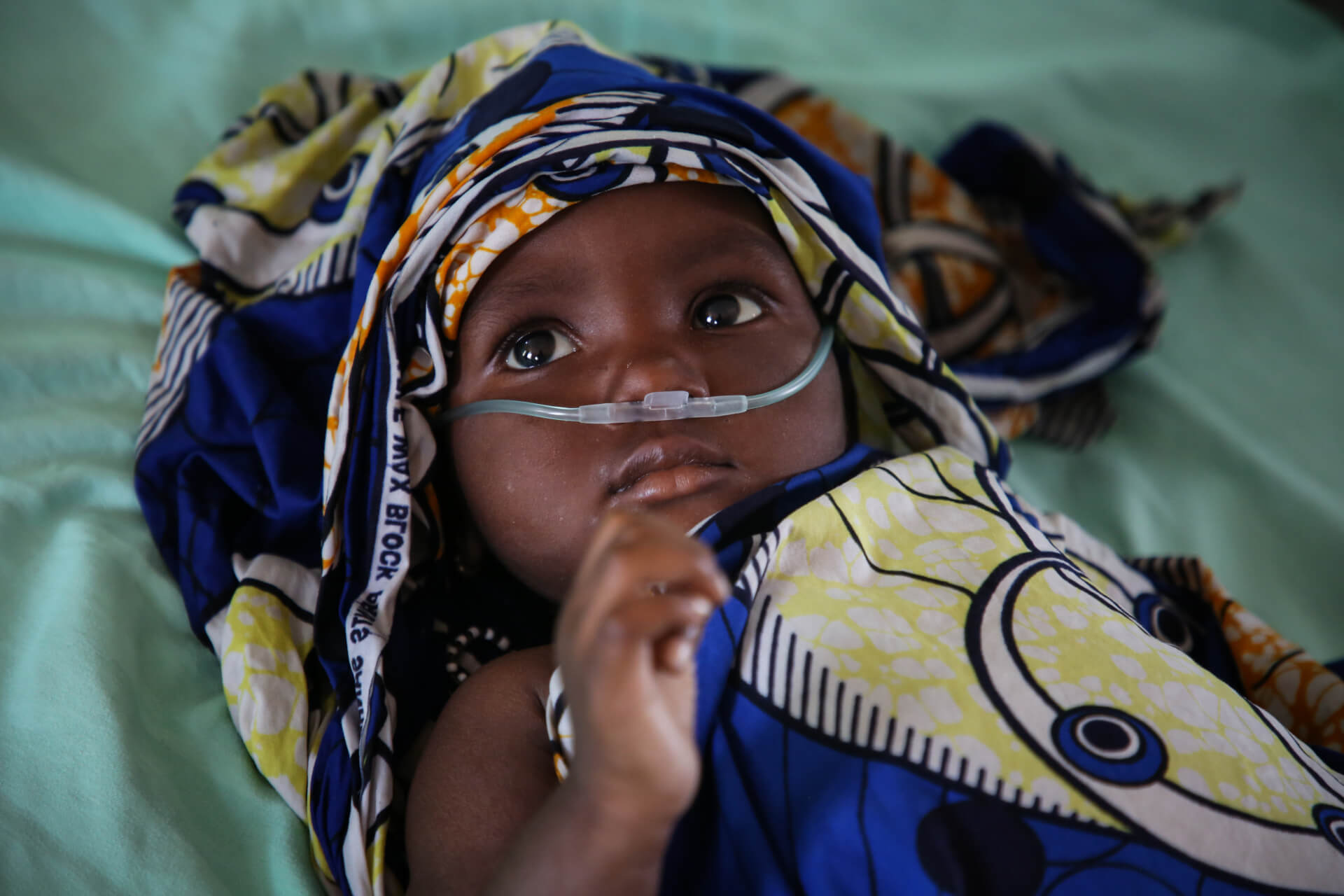
Why invest in medical oxygen
The need is clear
Medical oxygen is a lifesaving essential medicine with no substitute. Yet access to reliable oxygen remains severely limited in many parts of the world.
- Fewer than half of all health facilities in low- and middle-income countries (LMICs) have uninterrupted access to medical oxygen.
- More than 60% of the world’s population does not have access to safe, quality, and affordable medical oxygen services (Lancet Global Health Commission, February 2025).
The impact of investing in access to oxygen is clear, too
- Investing in medical oxygen is highly cost-effective, generating an estimated return of US$21 for every US$1 invested.
- On average, additional funding for improving oxygen systems over 2025–2030 can be expected to cost approximately US$ 168 per disability-adjusted life year (DALY) averted, and as little as US$ 23 in countries with very high burdens.
Expanding access to oxygen is therefore both a public health imperative and a smart investment.
The COVID-19 pandemic triggered major investments — but gaps remain
During the COVID-19 pandemic, the global community mobilized unprecedented resources to address acute oxygen shortages.
- An estimated US$1 billion was invested during the pandemic, largely in capital expenditures such as oxygen plants and delivery systems across LMICs.
- These investments were made in an emergency context and focused primarily on rapidly expanding production capacity.
However, many health systems now face significant challenges in sustaining these investments. In many countries, health facilities lack the resources, technical capacity, or financing mechanisms needed to operate, maintain, and integrate oxygen systems effectively into routine care.
As a result, the global oxygen ecosystem still faces major structural barriers.
A global framework to close the oxygen access gap
To address these challenges, the Global Oxygen Alliance (GO2AL) developed the Global Oxygen Strategic Framework and Investment Case (2025–2030).
This first-of-its-kind framework serves as a global public good that countries and partners can use to guide investments and strengthen national oxygen ecosystems. It provides a common roadmap for governments, donors, development finance institutions, international agencies, civil society, academia, and industry to coordinate efforts and address systemic barriers to oxygen access.
The Strategic Framework calls for US$4 billion in donor financing by 2030 to close the oxygen access gap in high-burden countries that cannot mobilize sufficient domestic resources alone.
Watch: Why investing in oxygen matters
The 3-min video below highlights the key messages of the Global Oxygen Strategic Framework and Investment Case (2025–2030) and calls for increased investment to ensure universal access to lifesaving medical oxygen.